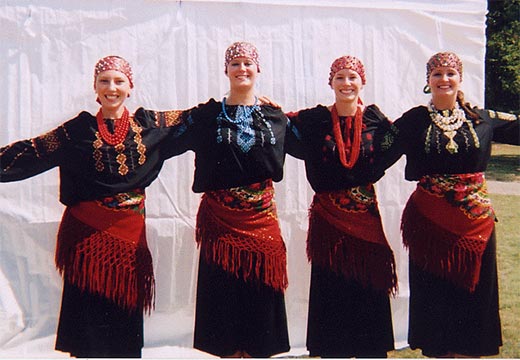
Enjoy a Nostalgic Trip Back to the 2013 Baltimore Ukrainian Festival
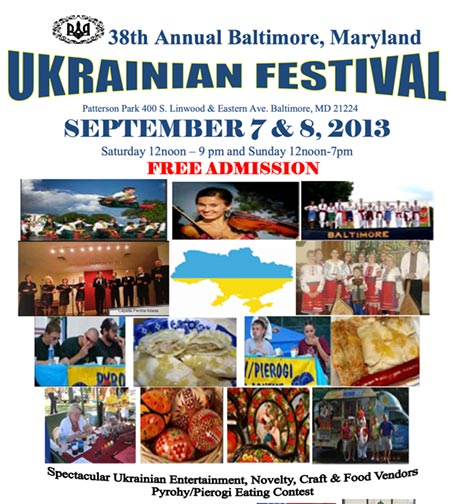
This was the official sor the 2013 Baltimore Ukrainian Festival,a two-day event featuring live music, traditional Ukrainian dancers, crafts vendors and authentic Ukrainian cuisine.
Content is from the site's 2013 archived pages.
Enjoy the nostalgic trip back.
If you are interested in attending a Baltimore Ukrainian Festival go to the festival's current website with all the most up to date news at: www.baltimoreukrainianfestival.com/
HISTORY
The Baltimore Ukrainian Festival Committee is a non-profit tax-exempt group under UCCA - Ukrainian Congress Committee of America established September 1976.
The mission and purpose of the Baltimore Ukrainian Festival Committee’s is to continue the tradition of sharing Ukrainian culture and heritage throughout the state of Maryland and to participate in the Baltimore Showcase of Nations Ukrainian Festival, the International Festival, World Folk Festival and Flagship Ukrainian Film Festivals.
From 1976-1995 the Annual Ukrainian Festival was held in the month of July. In 1996, the annual date was changed to the month of September due to cooler weather. The festival site has been held throughout Baltimore in various places. In the early years, Baltimore City Mayors encouraged ethnic festivals to be held in downtown Baltimore such as Hopkins Plaza, Rash Field Inner Harbor, or Festival Hall. From 1997 thru 2015 the Ukrainian Festival committee to return to Baltimore's own Ukrainian Village where they held the Uki-Fest at Patterson Park. In 2016 due to Baltimore City's increased fees, the festival was moved to St. Michael Ukrainian Catholic Church grounds at 2401 Eastern Ave. Baltimore Md. 21224.
Ukrainian Festival in Baltimore 2013 Konyku Syvavyj
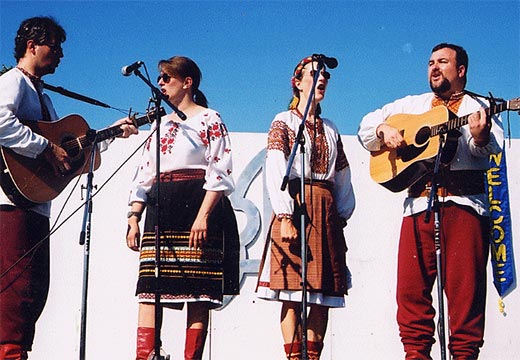
Ukrainian singing group "Persha Kliasa" from Baltimore, MD sings at the Ukrainian Festival in Baltimore in September of 2013. On stage: Soprano: Vera McFeaters First alto: Katherine Popovych Sec. alto: Donia Guy Tenor: Nazar Kalivoshko Sec. Bass: Pavlo Horbachevsky First Bass: Yurij Popovych Director: Nazar Kalivoshko
PRESS RELEASE
Ukrainian Festival Patterson Park
https://www.eventcrazy.com/
UKRAINIAN FESTIVAL 38th Annual Baltimore Showcase of Nations - UKRAINE!
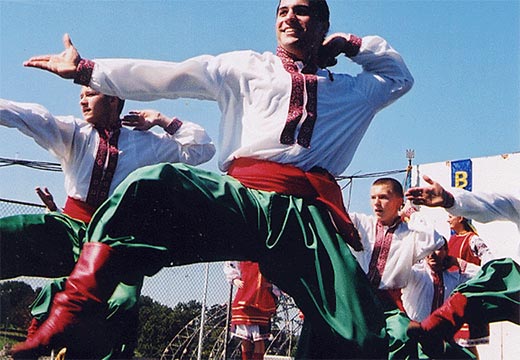
Enjoy a taste of Ukraine in Baltimore's Ukrainian Village....
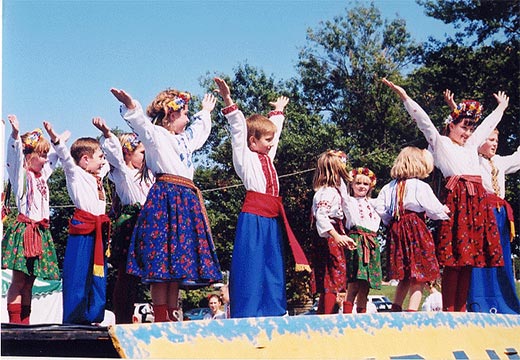
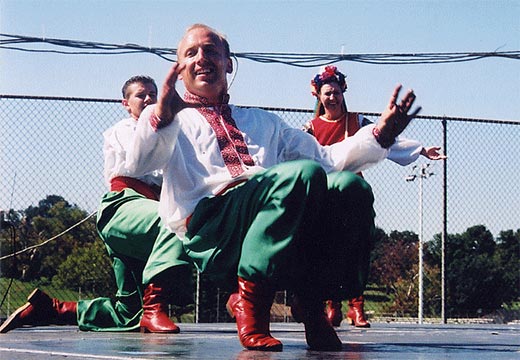
- Ukrainian Dance Groups with Kozaks with high kicks, splits & beautiful girls twirls &spins. featuring Baltimore's own LYMAN Ukrainian Dance Ensemble CYM "Promin" Ukrainian Dancers
- Singers & Musicians
- VENDORS: Ukrainian Food - All Homemade! PYROHY/Pierogies! Holubtsi - Stuffed Cabbage Rolls Kowbasa & Saurkraut Delicious Shish-ka-bobs Crapes, Borscht and more....
- Traditional Ukrainian Breads - PASKA
- Crafts & Novelty Vendors
- Funnel Cakes & Fried Potato Pancakes
- Children's Area - Moon-bounces Ice Cream & Shaved Ice Popcorn and Cotton Candy
- UKRAINIAN BEER GARDEN Live Uki Band - Accordian Extrodinaire Ukrainian Beer (5 Types) Medivka - Homemade Honey Liquor Raw Oysters Big Six Wheel - $
- UKRAINIAN CULTURAL CENTER TENT Passport to Ukraine Show
- Pyrohy/Pierogi Eating Contest on Sunday.
Location:
400 S. Linwood Ave
corner of Eastern Ave
Baltimore, MD
Seasonal: Weekend After Labor Day!
Hours:Sat. 12pm-9pm, Sun 12pm-7pm
Admission: Free
Phone Number:
(410) 967-0501
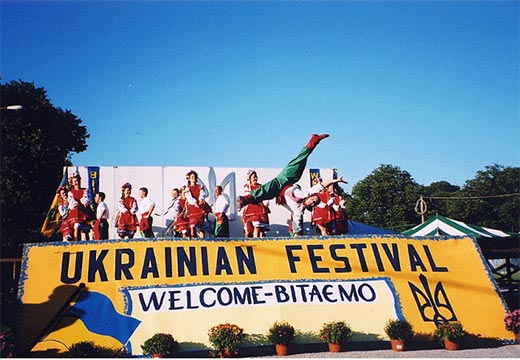
Welcome~Bitaemo
The Baltimore Ukrainian Festival Committee is a non-profit tax-exempt group under UCCA - Ukrainian Congress Committee of America established September 1976.
The Baltimore Ukrainian Festival Committee’s mission and purpose is to continue the tradition of sharing the Ukrainian culture and heritage through out the state of Maryland and participate in the Baltimore Showcase of Nations Ukrainian Festival and the International Festival.
The Annual Ukrainian Festival was held in the month of July from 1976-1995. In 1996, the annual date was changed to the month of September due to cooler weather. The festival site has been held through-out Baltimore in various places, but has found a home in beautiful Patterson Park, 400 S Linwood Ave corner of Eastern Ave.
Festival Committee members are welcome and encouraged to join from each organization within the Baltimore Ukrainian Communities to include all church denominations (Baptist, Catholic, Orthodox, etc), veterans’ organization, youth organizations, sports teams, dance group(s) and private organizations.
Baltimore Ukrainian Festival Committee works to share the Ukrainian heritage & culture by providing the following:
- Live Entertainment: Traditional Ethnic Dancers, Musicians & Singers
- Serve traditional foods, breads & beverages of Ukraine the bread basket of Europe
- Ukrainian Folk Arts: Paintings, Carved Wood & PSYANKY Egg Demonstrations
- Novelties: Ceramics, Embroidery Clothing, Jewelry, & Religious artifacts
- History of Ukraine – Famine, Chernobyl, Orange Revolution
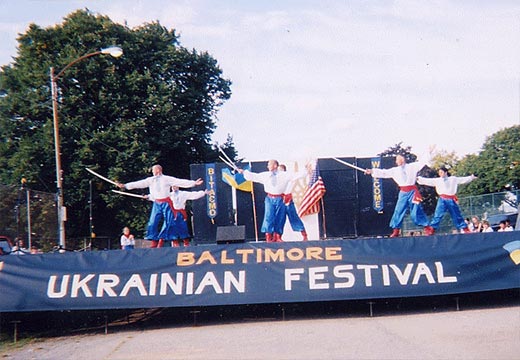
Baltimore Ukrainian Festival
38th Annual
Schedule of Events
|
Time
|
Saturday, September 7th
|
Sunday, September 8th
|
| 1:00 |
Opening Cermonies/National Anthems. |
Opening Cermonies MC – Maria Kaczaniuk Capella Persha Kliasa-Ukrainian A Capella Group |
| 2:00 | CARPATHIA Folk Dance Ensemble Solomia Gorokhivsk - Kiev Voilinist |
CARPATHIA Folk Dance Ensemble Solomia Gorokhivsk - Kiev Voilinist PROMIN CYM Ukrainian Youth Ensemble |
| 3:00 | LYMAN Ukrainian Dance Ensemble | LYMAN Ukrainian Dance Ensemble |
| 4:00 | Capella Persha Kliasa-Ukrainian A Capella Group | PYROHY/PIEROGI Eating Contest! |
| 4:30 | Solomia Gorokhivska – Kiev Violinist | |
| 5:00 | CARPATHIA Folk Dance Ensemble Solomia Gorokhivsk - Kiev Voilinist |
CARPATHIA Folk Dance Ensemble Solomia Gorokhivsk - Kiev Voilinist |
| 6:00 | LYMAN Ukrainian Dance Ensemble | LYMAN Ukrainian Dance Ensemble |
WE HONOR OUR FOUNDING FATHERS & COMMITTEE MEMBERS OF THE PAST 30 YEARS.
THANK YOU FOR YOUR LOVE AND SUPPORT!
Should you have any questions regarding the festival or being a vendor please contact us! The Vendor Application is available for the 2013 season and will be updated accordingly.
Stephen & Jullie Humeniuk, Co-Chairpersons
8727 Gerst Ave Perry Hall MD 21128
410-967-0501 or info.UkrainianFestival@gmail.com
Ukrainian Festival in Baltimore 2013 Pyite Brattia Popyite
Ukrainian singing group "Persha Kliasa" from Baltimore, MD sings at the Ukrainian Festival in Baltimore in September of 2013.
Festival Contact Information:
Stephen & Jullie Humeniuk, Co-Chairpersons
8727 Gerst Ave Perry Hall MD 21128
410-967-0501 or info.UkrainianFestival@gmail.com
Festival Committee meetings are held 1st Monday of each month at the Ukrainian American Youth Association Hall 2301 Eastern Ave, Balto. MD. 21224 at 7pm
More Background On UkrainianFestival.net
UkrainianFestival.net served as the nostalgic online home for information about the Baltimore Ukrainian Festival during the early 2010s, particularly around the 2013 season. While the website itself became inactive and was eventually replaced by newer branding and updated portals for the annual event, its archived versions continue to provide valuable insight into the festival’s history, cultural mission, organizational structure, and community impact within Baltimore’s Ukrainian-American population and the broader mid-Atlantic region. The site was primarily informational in nature—outlining schedules, highlighting performers, explaining traditional foods, promoting heritage education, and reflecting the long-standing tradition of Ukrainian cultural celebration in Maryland.
Although UkrainianFestival.net is now defunct, archival snapshots and secondary online documentation reveal a website that played a true cultural service: preserving the visibility of Ukrainian heritage during a period of growing global awareness of Ukrainian identity. The Baltimore Ukrainian Festival remains one of the longest-running Ukrainian celebrations in the United States, and this website captured a transitional moment in its evolution before it moved to newer digital formats.
Ownership and Organizational Structure
The website existed to distribute information generated by the Baltimore Ukrainian Festival Committee, a non-profit, tax-exempt organization operating under the Ukrainian Congress Committee of America (UCCA). This affiliation placed the festival within a national network of Ukrainian cultural initiatives, ensuring coordination with broader community goals such as diaspora engagement, heritage preservation, and public awareness of Ukrainian history.
The committee itself was composed of leaders from Baltimore’s Ukrainian churches, youth groups, community associations, cultural ensembles, and civic organizations. The structure encouraged participation across denominations—Catholic, Orthodox, and Baptist—reflecting the diversity of Ukrainian religious life. This inclusiveness shaped both the composition of the festival’s leadership and the range of performances, exhibits, and educational offerings showcased each year.
Throughout the early 2010s, the festival committee was chaired by Stephen and Jullie Humeniuk, who coordinated logistics, vendor relationships, volunteer management, and communications. Their leadership was consistently referenced in public announcements, press releases, and community newsletters. UkrainianFestival.net served as the principal online point of contact for vendor applications, community inquiries, and scheduling updates during this era.
Location and Proximity to Key Ukrainian Landmarks
Historically, the Baltimore Ukrainian Festival has been held in multiple locations across the city since its founding in 1976. Earlier years saw events staged in central public spaces—including Hopkins Plaza, Rash Field at the Inner Harbor, and Festival Hall—reflecting city-wide initiatives to promote ethnic festivals in downtown Baltimore.
By the early 2000s and into the era represented at UkrainianFestival.net, the festival had firmly settled into Patterson Park, located at the corner of Eastern Avenue and South Linwood Avenue. This location placed the festival within Baltimore’s Ukrainian Village, a cultural neighborhood anchored by Ukrainian churches, youth association halls, and long-standing community institutions.
Nearby points of interest included:
-
St. Michael Ukrainian Catholic Church, an architectural landmark and community hub
-
The Ukrainian American Youth Association (CYM) Hall, used for committee meetings and youth events
-
Small businesses and delis selling traditional Eastern European foods
-
Residential clusters of Ukrainian-American families who had lived in the area for generations
The festival’s relocation back to Ukrainian Village in 1997 symbolized a return to cultural roots, strengthening the event’s community identity. In 2016, due to rising municipal fees, the festival moved to the grounds of St. Michael Ukrainian Catholic Church—another location deeply connected to Baltimore’s Ukrainian heritage.
History and Development of the Festival
According to archived content from UkrainianFestival.net, the Baltimore Ukrainian Festival originated in September 1976, placing it among the oldest ethnic festivals in the mid-Atlantic. Founded during a period of significant Ukrainian immigration and political activism, the festival served both as a social gathering and as a platform for cultural education.
Important historical milestones include:
From 1976 to 1995
The festival was held annually in July. These early decades emphasized community unity during a time when Ukraine was still under Soviet rule, making cultural expression especially meaningful for diaspora communities.
Shift to September After 1996
Organizers moved the festival to the weekend after Labor Day due to Baltimore’s hot summers. September offered cooler weather, better attendance, and more comfortable outdoor conditions for dancers and musicians wearing traditional garments.
Return to Ukrainian Village in 1997
This year marked a significant symbolic and logistical change as the festival returned to the heart of Baltimore’s Ukrainian community. Patterson Park offered open space, accessibility, and cultural relevance.
Expansion of Programming in the 2000s
As global interest in Eastern European culture grew, the festival diversified its offerings, adding more vendors, heritage tents, youth activities, and historical exhibits focusing on topics such as:
-
The Holodomor
-
The Chernobyl disaster
-
The Orange Revolution
-
Traditional folk art demonstrations
The festival became not only a celebration of culture but also an educational event addressing historical trauma and resilience.
Popularity and Attendance
While the website did not publish precise attendance numbers, external event listings, community newsletters, and press coverage suggest that the Baltimore Ukrainian Festival regularly attracted thousands of visitors each year. Attendance came not only from Baltimore but also from:
-
Washington, D.C.
-
Northern Virginia
-
Pennsylvania
-
Delaware
-
New Jersey ethnic communities
The festival’s popularity was driven by a combination of unique cultural elements, especially dance ensembles, authentic foods, and the friendly atmosphere of Ukrainian Village. Its late-summer timing allowed it to serve as a capstone event for the region’s multicultural festival season.
Festival Programming and Events
Live Performances
UkrainianFestival.net highlighted a rich lineup of traditional and contemporary performers. Recurring acts included:
-
LYMAN Ukrainian Dance Ensemble – known for intricate footwork and visually striking costumes
-
CARPATHIA Folk Dance Ensemble – performing traditional Carpathian dances with athletic choreography
-
CYM “Promin” Ukrainian Youth Dancers – representing the youth component of cultural preservation
-
Capella Persha Kliasa – an a capella singing group featuring multiple harmonized parts
-
Solomia Gorokhivska, violinist trained in Kyiv, noted for classical crossover performances
The website’s archived schedule from 2013 showcased a coordinated rotation of dance sets, music, introductions, and cultural demonstrations across both festival days. Opening ceremonies typically included national anthems and welcoming remarks by community leaders.
Cultural Exhibits and Educational Initiatives
The festival emphasized cultural education, using tents and exhibit areas to teach visitors about:
-
Ukrainian embroidery traditions
-
Pysanky egg decorating
-
Woodcarving
-
Visual arts and iconography
-
Ukrainian immigration history
-
National tragedies and political movements
The “Passport to Ukraine” cultural tent served as a central educational feature, allowing visitors to learn geography, history, language basics, and symbolism in Ukrainian culture.
Food, Menus, and Culinary Traditions
Food was one of the festival’s biggest draws, with all items prepared by local community members using authentic recipes. UkrainianFestival.net highlighted a full traditional menu, including:
-
Pyrohy (Pierogies) filled with potato, cheese, or sauerkraut
-
Holubtsi, cabbage rolls stuffed with meat and rice
-
Kovbasa with sauerkraut
-
Borscht, beet soup with optional beef
-
Shish-kabobs
-
Potato pancakes
-
Traditional breads such as Paska
-
Ukrainian crepes
The festival also featured a Ukrainian Beer Garden, offering imported beer, honey liqueur (Medivka), and live accordion music—a lively social hub for adults.
The pyrohy-eating contest, held annually, became a crowd favorite and generated local media attention.
Vendors and Marketplace
The festival marketplace offered a wide array of cultural goods, often handmade or imported directly from Ukraine. Products typically included:
-
Embroidered blouses and shirts (vyshyvanky)
-
Carved wooden religious artifacts
-
Painted ceramics
-
Folk art and jewelry
-
Textiles and woven belts
-
Ukrainian flags and cultural souvenirs
-
Children’s toys
This component of the festival helped sustain small artists, artisans, and importers, contributing to preservation of traditional crafts.
Audience and Community Engagement
The festival appealed to a broad demographic, including:
-
Ukrainian-American families attending year after year
-
Local residents curious about Eastern European culture
-
Tourists visiting Baltimore during the fall
-
Students and academics studying Slavic history
-
Food enthusiasts
-
Folk dance and music fans
The children’s zone, offering moon-bounces, shaved ice, popcorn, and games, ensured the festival remained family-friendly. Meanwhile, educational exhibits attracted individuals interested in Ukraine’s political and cultural history.
The festival’s leadership encouraged participation from every Ukrainian organization in the region, fostering unity across generational and denominational lines. Committee meetings—held at the Ukrainian American Youth Association Hall—were open to community representatives seeking involvement or offering feedback.
Media Coverage and Publicity
Over the years, the festival gained coverage from local newspapers, cultural blogs, ethnic community publications, and event listing platforms. Press releases often emphasized the unique features of Ukrainian dance, heritage crafts, and traditional cuisine.
Media highlights included attention to:
-
Authentic food preparation
-
Athletic Cossack-style dance performances
-
Cultural exhibits addressing historical tragedies
-
The Ukrainian Beer Garden
-
Youth participation in CYM ensembles
During years of heightened geopolitical significance for Ukraine—such as the years surrounding the Orange Revolution or the Euromaidan movement—local media outlets often used the festival as a platform to discuss broader global events.
Cultural and Social Significance
The importance of the Baltimore Ukrainian Festival extends far beyond entertainment. Its cultural and social contributions include:
Preservation of Ukrainian Identity
For many Ukrainian-Americans, especially second- and third-generation immigrants, the festival reinforces connection to heritage through:
-
Language
-
Music
-
Food
-
History
-
Communal gathering
Fostering Multicultural Dialogue
The festival participates in Baltimore’s Showcase of Nations, aligning with other ethnic celebrations and promoting cross-cultural appreciation. Visitors often remark on how accessible and educational the festival is for non-Ukrainians.
Historical Awareness
The festival used UkrainianFestival.net and other platforms to educate the public about key historical events, including:
-
The Holodomor famine
-
Soviet oppression
-
Chernobyl disaster
-
Ukrainian struggles for independence
This educational mission emphasized resilience, identity, and cultural endurance.
Strengthening Diaspora Networks
The festival brings together churches, youth groups, veterans’ organizations, and artistic troupes, strengthening intergroup connections.
Transition and Legacy of UkrainianFestival.net
Although the website is no longer active, its role during the early 2010s was significant. It acted as:
-
A historical snapshot of festival development
-
A promotion tool during a period of growth
-
A digital archive for schedules, performers, and traditions
-
A communication channel for organizers and vendors
Today, newer websites and social media channels have replaced it with updated branding and mobile-friendly features. However, the archived pages remain valuable for researchers, cultural historians, and members of the Ukrainian diaspora who seek to preserve memories of past festivals.
UkrainianFestival.net captured an important chapter in the evolution of one of Baltimore’s most celebrated ethnic festivals. Through its information, schedules, cultural descriptions, and historical materials, the website documented the collective efforts of the Ukrainian-American community to preserve their traditions while engaging the broader public. Although the site itself is no longer active, its historical value endures through archived content and the ongoing success of the Baltimore Ukrainian Festival.